Why is it still numb, four months later?
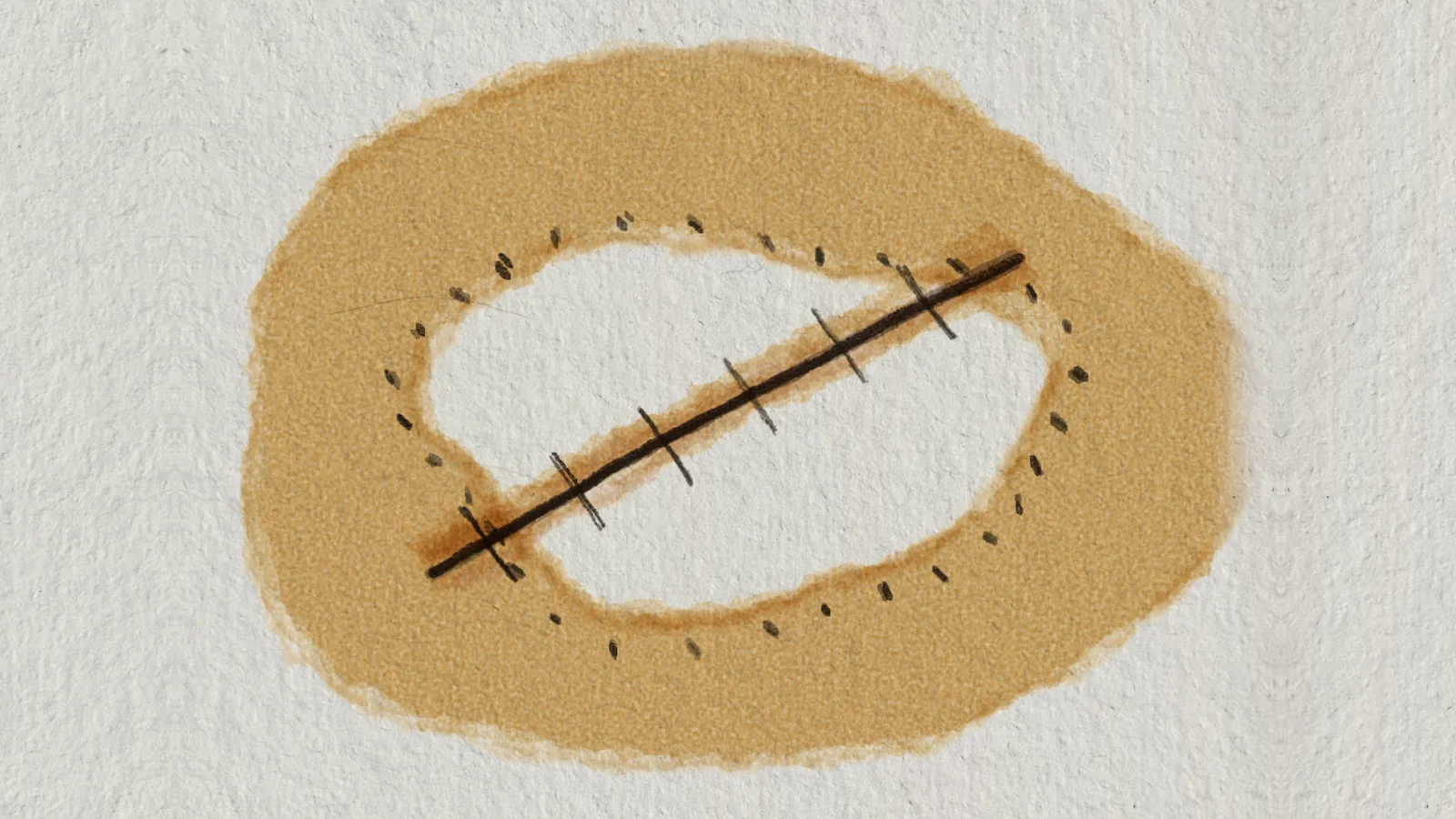
Usually nothing is wrong. Nerves are just slow.
Pain after surgery is expected, so people tolerate it. Numbness is not, so it worries them - and it tends to worry them most at the point when everything else has settled and this one thing has not.
In the large majority of cases, numbness is not a sign that something was damaged beyond repair. It is a sign that repair is happening at the speed nerves happen to work at, which is far slower than the rest of you.
Every cut goes through nerves
Not the big ones with names. A fine net of nerve threads runs just under your skin, and no incision can avoid it. Whatever the operation, the skin beside the scar has lost some of its wiring for a while.
A nerve is a wire inside a pipe
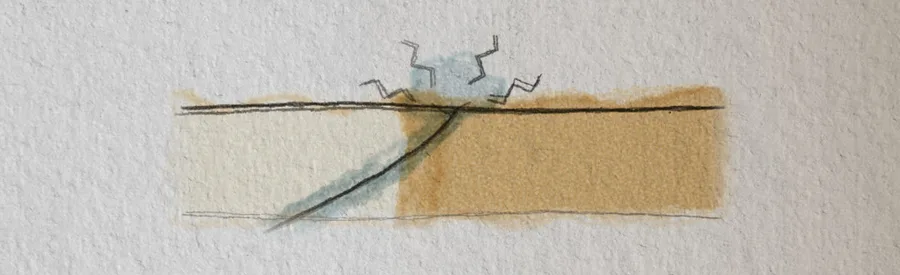
Each nerve fibre is a living wire running inside a thin tube. Cut it, and the wire beyond the cut dies back - but the empty pipe stays. That pipe decides how the feeling comes back.
Two roads back
Road 1: back down the pipe, about a millimetre a day. A new wire grows from the cut end and slides down the old pipe. Fingernails grow about 0.1 mm a day, so this is roughly ten times fingernail speed.
Road 2: no pipe, about 0.02 mm a day. Where there is no pipe to follow, healthy nerves at the edge of the numb patch branch sideways into it. Measured in human skin, that is around five times slower than a fingernail and about fifty times slower than Road 1 - which is why the centre of a numb patch is always the last part to wake up.
Pins and needles are a good sign
New nerve endings are twitchy before they settle. Tingling, small electric zings, an odd itch when the skin is touched, a patch that feels strange rather than absent - that is arrival, not damage.
One exception worth knowing: a single sharp spot that keeps getting worse, rather than a broad area gradually waking up, is a different thing. Show that one to your surgeon rather than waiting it out.
How long depends on what happened to the pipe
This is where the pipe pays off. What happens to the wire matters less than what happens to the pipe.
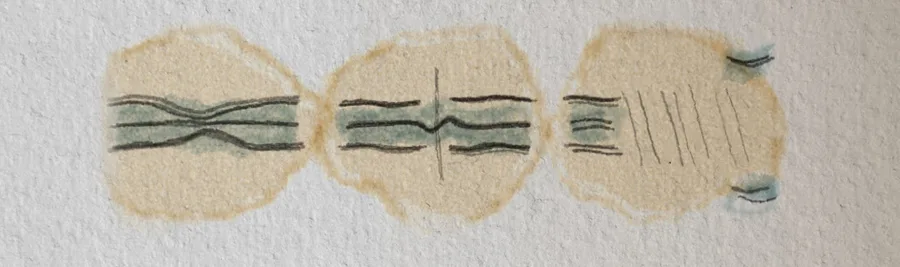
The pipe survived — weeks. Liposuction mostly bruises nerves rather than dividing them. The wire is stunned, the pipe is intact, and function returns comparatively quickly. Objective testing after liposuction found sensation back to normal at around six weeks for suction-assisted technique, and about ten weeks after ultrasound-assisted, with roughly nine in ten patients recovered by the ten-week mark.
The wire was cut but the pipe remains — months. A cut nerve regrows down the empty pipe it left behind, at roughly a millimetre a day. To put that in something you own: fingernails grow about 0.1 mm per day, so a regenerating nerve is moving at about ten times fingernail speed. Over a distance of several centimetres, that is months.
The pipe is gone — years, and possibly permanently in a patch. Where tissue is removed or skin is lifted widely, as in a tummy tuck, there is no pipe left to follow. The only route back is neighbouring nerves branching sideways into the area, which happens dramatically more slowly - and it fills in from the edges, so the centre of the patch is last.
How slowly? A randomised trial following abdominoplasty patients for a mean of nearly four years found two-thirds still had altered sensation below the umbilicus at three and a half years. That is not a complication. That is the expected course, and it is why the consent conversation for abdominoplasty should always include it.
Numb skin cannot warn you
This is the one genuinely important safety point, and it is easy to underestimate.
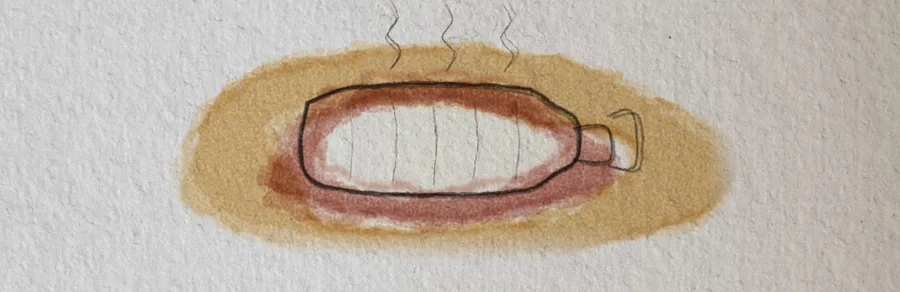
Skin you cannot feel will not tell you it is being burned. A hot water bottle, a heating pad, a laptop resting on your lap, an ice pack left on too long - normally your skin pulls you away long before damage occurs. Numb skin does not.
Keep heat and ice off any area you cannot feel properly. Not "be careful with" - off.
This applies for as long as the numbness lasts, which after some operations means months.
What to expect, and when to ask
Numbness after liposuction resolves on a timescale of weeks. After wide undermining it can take years, and a patch may simply stay. Neither means something went wrong.
A millimetre a day in a pipe. Far slower without one.