Your child splits their face open. What's the first thing to check?
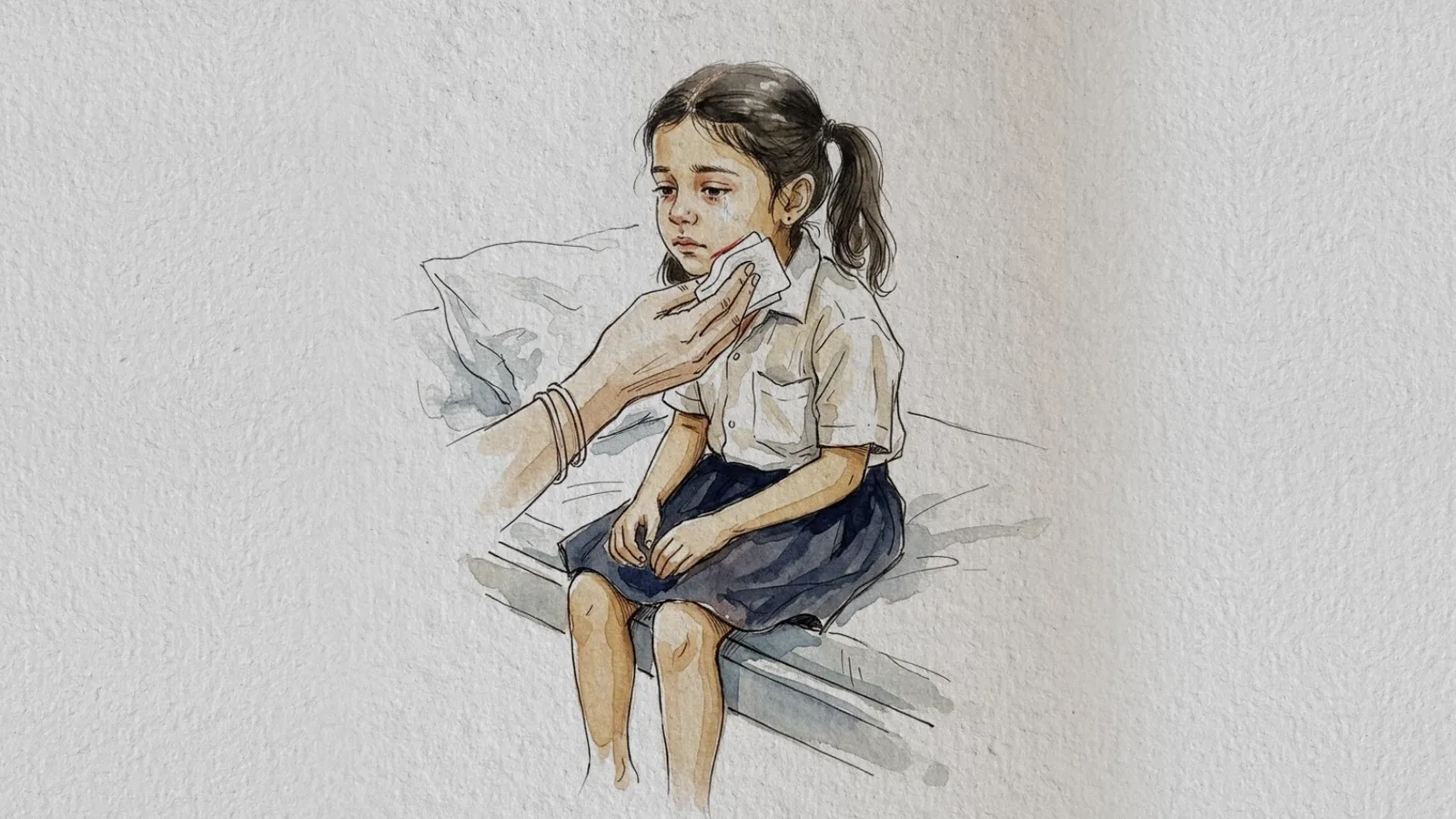
The first thing I check is how deep it goes
When a child comes in with a cut face, parents usually want to know one thing: stitches or glue? That is the second question. The first one is depth.
Skin has two layers that matter here. The surface layer is thin. Beneath it is the dermis - thick, white and tough. It gives skin its strength, and it supplies the surface layers with their cells.
Whether the dermis survived decides everything next. So how do I tell?
I pull gently on both sides of the cut
With the wound clean, I put light traction on the skin either side of it and watch what the edges do.
It takes a few seconds, it does not hurt, and it is the single most useful thing that happens at the first assessment.
If it holds, I wash it out and tape it
First the wound is syringed out thoroughly. Irrigation matters more than anything that follows it - contamination, not time, is what drives infection.
Then sterile adhesive strips bring the surface layer together. No needle is needed. The intact dermis is already doing the structural work; the tapes only keep the top layer aligned while it knits.
If it gapes, I stitch it in layers
On hair-bearing scalp, a single layer is enough. The scalp heals well and the hair covers the line.
Anywhere on the face, I close the deep dermis first, with buried stitches, and then the surface on top of it. The deep layer takes the tension, so the surface edges rest together instead of being dragged - and tension, far more than length, is what decides how a scar heals.
If the muscle is cut, I repair it too
Some facial cuts go deeper still, into the muscle underneath - around the lips, the eyebrows and the chin especially.
Stitch only the skin and it looks fine for weeks. Then it heals with nothing underneath it, and it sinks into a dent. The muscle has to be brought back together as its own layer, so the skin has something to lie on.
Glue or stitches?
Tissue glue is quick and painless, and early on the wound can look excellent. Over the longer run the evidence is thinner than either side usually admits.
A 2023 meta-analysis of 18 randomised trials (1,020 patients, face and neck wounds) found:
So the honest summary is: no clear winner on the numbers, and very little long-term data.
My own practice is not to use glue on the face. It holds almost no tension, so it only suits wounds where the dermis has already survived - and those close perfectly well with tapes. It is also a foreign body on the skin, and Indian skin is more prone to scarring after inflammation, so any reaction to it tends to show in the final scar. That is clinical judgement rather than a trial result, and I say so.
On arms and legs, I look underneath
The face has a generous layer of tissue between the skin and anything critical. Limbs, particularly the hands, wrists, forearms and shins, often do not.
Nerves, tendons and blood vessels sit just under the deep fascia, frequently with very little fat over them. Even a hint of a breach in the fascia means I explore, to check that each structure is alive and intact. A cut tendon or nerve closed over as a skin wound is found weeks later, when it is much harder to fix - this is the work of nerve, vessel and tendon repair.
You usually have time
For a clean facial cut, it is better to reach the right expert than to have it closed quickly and wrongly. In my practice, a clean facial wound can almost always wait 48 to 72 hours for a proper layered closure.
The evidence supports the principle, if not an exact number. The old teaching of a six-hour "golden period" has not held up: in a study of 2,663 patients with traumatic cuts, infection was no more common in wounds closed after 12 hours than before. The face, with its rich blood supply, is the most forgiving site of all. Published data mostly stop around 24 hours, so the longer window is my own clinical position rather than a trial finding.
While you wait: rinse the wound gently under clean running water, cover it with a clean dressing, and keep it covered.
Only heavy bleeding is urgent. Press firmly, right on it, with a clean cloth, and keep pressing without peeking until you reach a surgeon.
Go to an emergency department straight away if
For everything else, the face deserves the right hands more than the fastest ones. Facial wounds are a large part of traumatic reconstruction, and a scar that did not heal well can often be improved later with scar revision - but the best time to get it right is the first closure.
If it's the face, take your child to a plastic surgeon. You have time.
Have Questions?
Discuss your specific needs and expected outcomes with Dr. Sumit directly.
Request Consultation