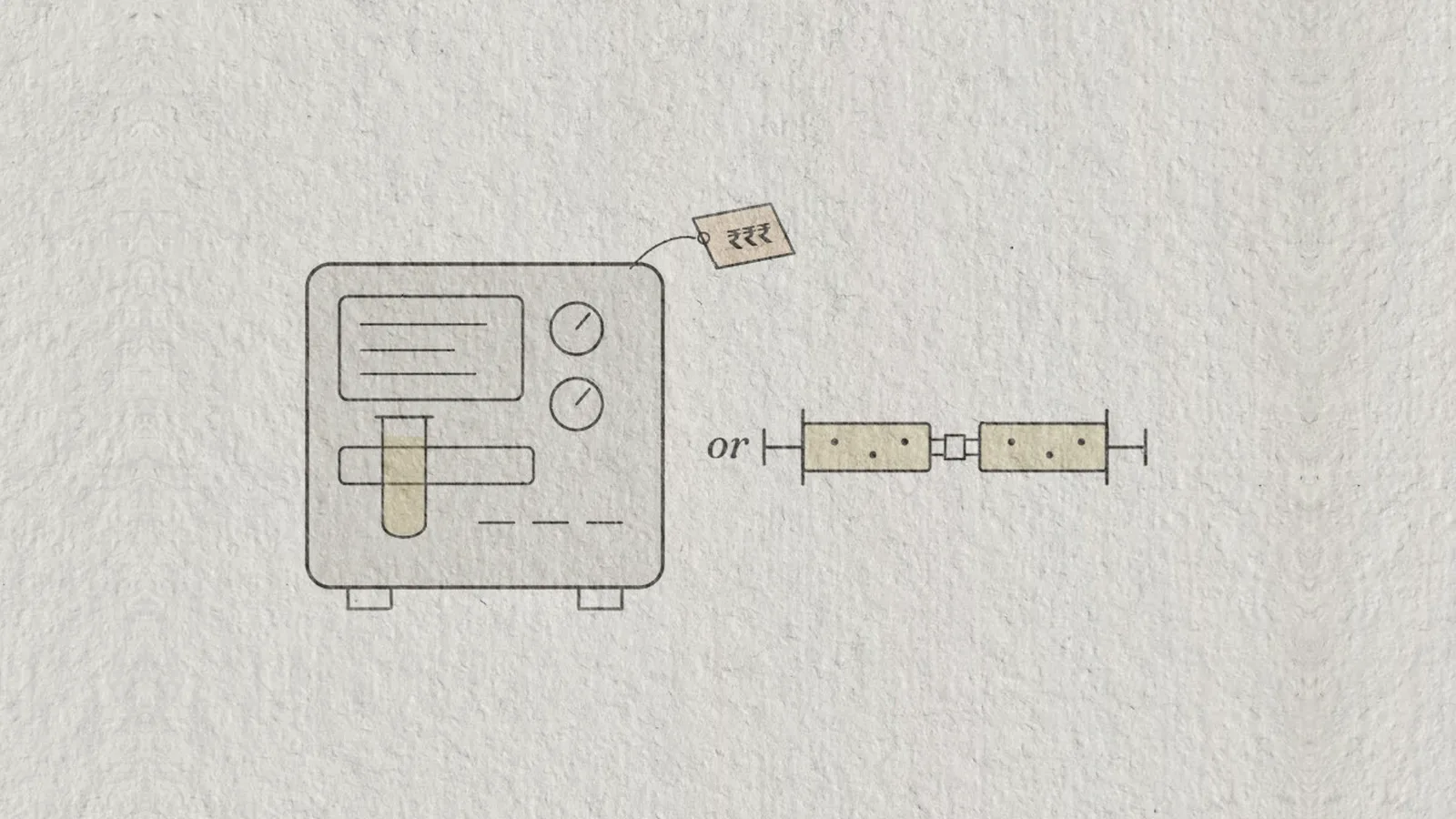
The expensive stem cell machine, or two syringes. Which would you pick?
Your fat is full of repair cells
Fat is not just padding. Among the fat cells sit stem cells and other repair cells - together called the stromal vascular fraction, or SVF - living in a microscopic scaffold of collagen.
That is why fat injected into the face can improve skin and scars, not just fill volume. But to get at those cells, the fat has to be broken down first. There are two ways to do it.
Way one: an enzyme
An enzyme called collagenase digests the collagen scaffold that holds fat together. The fat cells float off and are discarded, and what is left is pure SVF: lots and lots of stem cells, floating free as single cells.
That is what the expensive machine does.
Way two: two syringes
The other way is done by hand. Fat is pushed rapidly back and forth between two syringes joined by a small connector, until the shear force breaks it open. This is nanofat.
You get fewer stem cells this way. But the ones you get stay attached to fragments of the scaffold they live in.
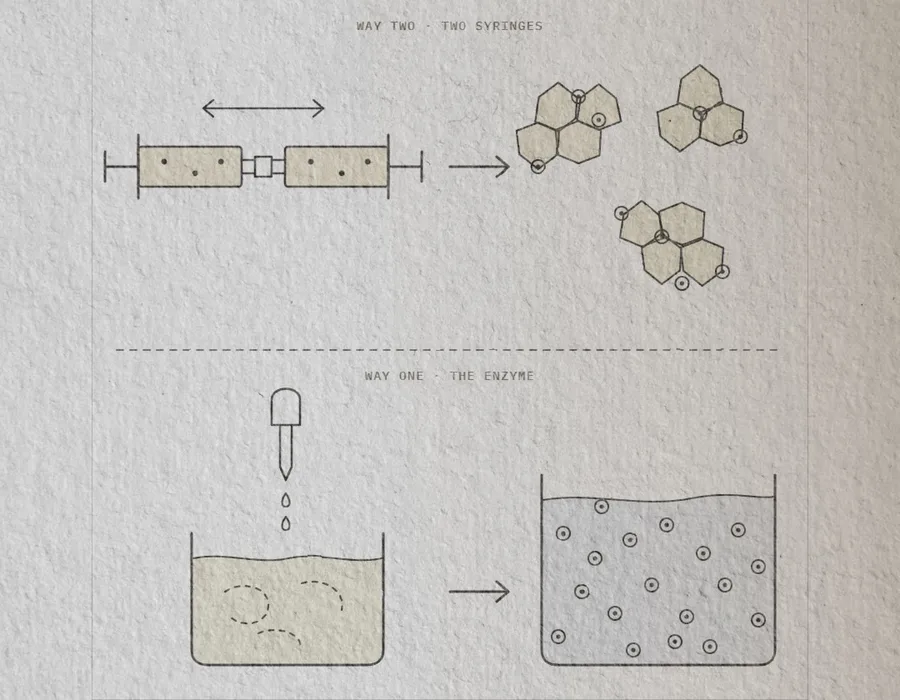
So the enzyme wins on count. Which would you pick now?
Count the survivors
Here is the catch. Stem cells cut loose from the scaffold they are anchored to tend to die off - a process biologists call anoikis, literally "homelessness". A cell count at the moment of injection says little about how many are still alive a week later.
In mouse studies, the same cells survived better when delivered as an intact sheet than when injected as a loose suspension. And when researchers tried the comparison with fat itself, two-syringe fat that kept its scaffold healed wounds in mice better than the loose-cell version.
Both of those are animal studies, and I say so. Evidence for nanofat in human skin is still graded as low. But the biology points one way: more cells is not the same as more surviving cells.
Nanofat has been around since 2013
Dr. Tonnard and Dr. Verpaele published the technique from Ghent, where I trained, in 2013. It spread slowly - partly because only a surgeon can harvest fat, while anyone can inject what arrives in a labelled syringe.
There is also a regulatory difference worth knowing. In the United States, the FDA treats enzyme-isolated SVF as more than minimally manipulated tissue, which puts it under far stricter rules. Mechanically processed fat stays much closer to simply being your own tissue moved to a new place.
In practice, I use nanofat as part of fat grafting: fat placed where volume has been lost, and nanofat needled into the skin above it. It is also one of the tools in scar revision.
Three questions before anything "new"
The machine is not the villain here. The pattern is: a newer, more expensive option sold on a bigger number. You can test any of them with three questions.
If the answers are the seller, no, and not long: wait. The same three questions take apart a lot of skincare marketing too - see why "more collagen" is the wrong goal.
Treat new as new.
Have Questions?
Discuss your specific needs and expected outcomes with Dr. Sumit directly.
Request Consultation